Example Polished Concrete Projects in Glendale

Five floor jobs, from an oil-stained garage to a dyed den, each with the space, what the owners want, the work and a rough price.

These are examples and not past jobs, clients or addresses. Local home ages, the steps each floor needs and 2026 price ranges went into them, so you can see roughly what a job involves before you ask for a quote.

Polished two-car garage floor after years of oil stains

Example project

Home
1980s house in Glendale with a two-car garage
Original request
A garage floor that looks clean again after decades of oil drips
Floor
About 450 sq ft of slab with oil stains at the parking spots and old patched cracks
Finish
Satin polish with the patches blended in
Prep
Stains ground out as far as they will go
Estimated cost
$2,300

Scope of work

Garage emptied, the slab degreased and ground through extra passes over the stained areas, old patches cleaned out and refilled, a densifier, polishing to a satin finish and a stain guard.

Project overview

In this example, the owners of a 1980s house in Glendale have a garage slab that has soaked up oil for decades and has a few cracks patched with gray filler. They want it to look like a finished floor.

The stained areas get extra grinding passes, and the old patches are cleaned out and refilled. Then the slab is polished to a satin finish. Some staining may remain, so a test patch is ground first.

The goal

The goal is a clean, even-looking garage floor, with whatever staining remains blended in.

Process

  1. Planning Slab checked for stains, patches and cracks, and a test patch ground.
  2. Grinding Stains ground out, patches cleaned out and refilled.
  3. Densify and polish Densifier applied, then the floor polished.
  4. Guard Stain guard applied and the garage handed back.

Planning right

  • Oil that has soaked in deep may leave a shadow after grinding.
  • Refilled cracks keep a slightly different tone.
  • Satin hides drips and tire marks better than a gloss.
  • Park outside until the guard has dried.
Get a free quoteMore about polished garage floors

Charcoal dyed floor in a den with a picture window

Example project

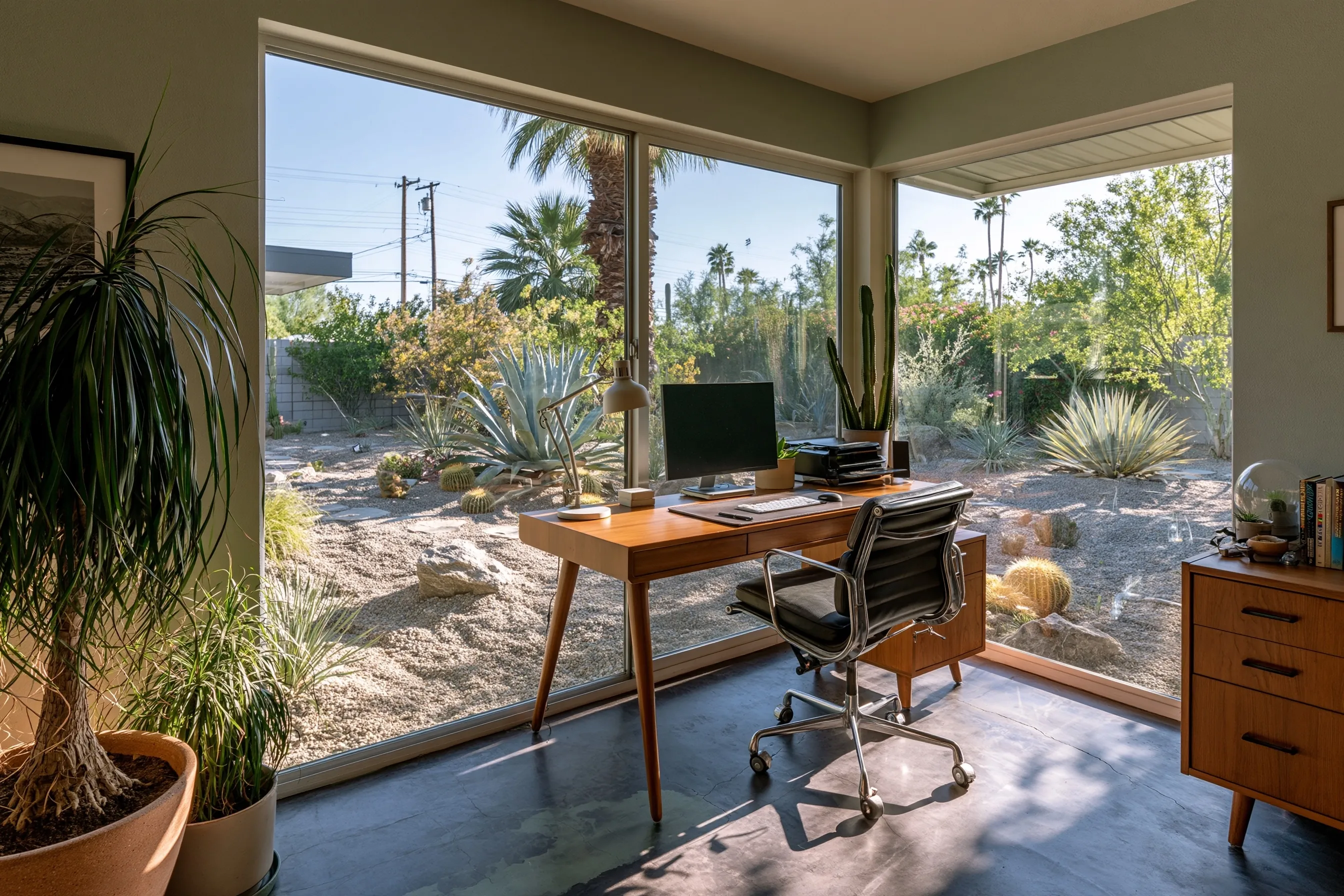
Home office with a dark charcoal dyed concrete floor, a mid-century desk and a picture window onto a gravel yard with palms
Home
1970s house in Glendale with a picture window
Original request
A darker floor in the den to replace dated vinyl
Floor
About 240 sq ft of slab, one room
Color
Charcoal dye, one color
Finish
Polished to a low sheen
Estimated cost
$2,200

Scope of work

Desk and chair moved out, the vinyl and its glue removed, cracks filled, one charcoal dye color worked in, a densifier, polishing to a low sheen and a stain guard.

Project overview

In this example, the owners of a 1970s house in Glendale use the den as an office. The vinyl floor is worn and dated, and under it is a plain slab. They want a dark floor to go with the wood desk and the picture window.

The vinyl and its glue come off, and the older glue is tested first. A charcoal dye is worked into the slab and the floor is polished to a low sheen, so the room feels calm and looks onto the yard.

The goal

The goal is a dark, quiet den floor that suits the window and the furniture.

Process

  1. Planning Slab checked, glue sampled for testing and a charcoal sample made.
  2. Grinding Vinyl and glue removed, cracks and chips filled.
  3. Dye Dye applied in even passes.
  4. Polish and guard Densifier, polish to a low sheen and a stain guard.

Planning right

  • Older glue is tested before it is ground, and testing is priced on its own.
  • A dark floor shows dust; a low sheen hides more than a gloss.
  • Dye varies from slab to slab, so ask for a sample.
  • Pick the desk and rug after the floor is done.

Get a free quoteMore about stained and dyed floors

Satin polished floor in an industrial building

Example project

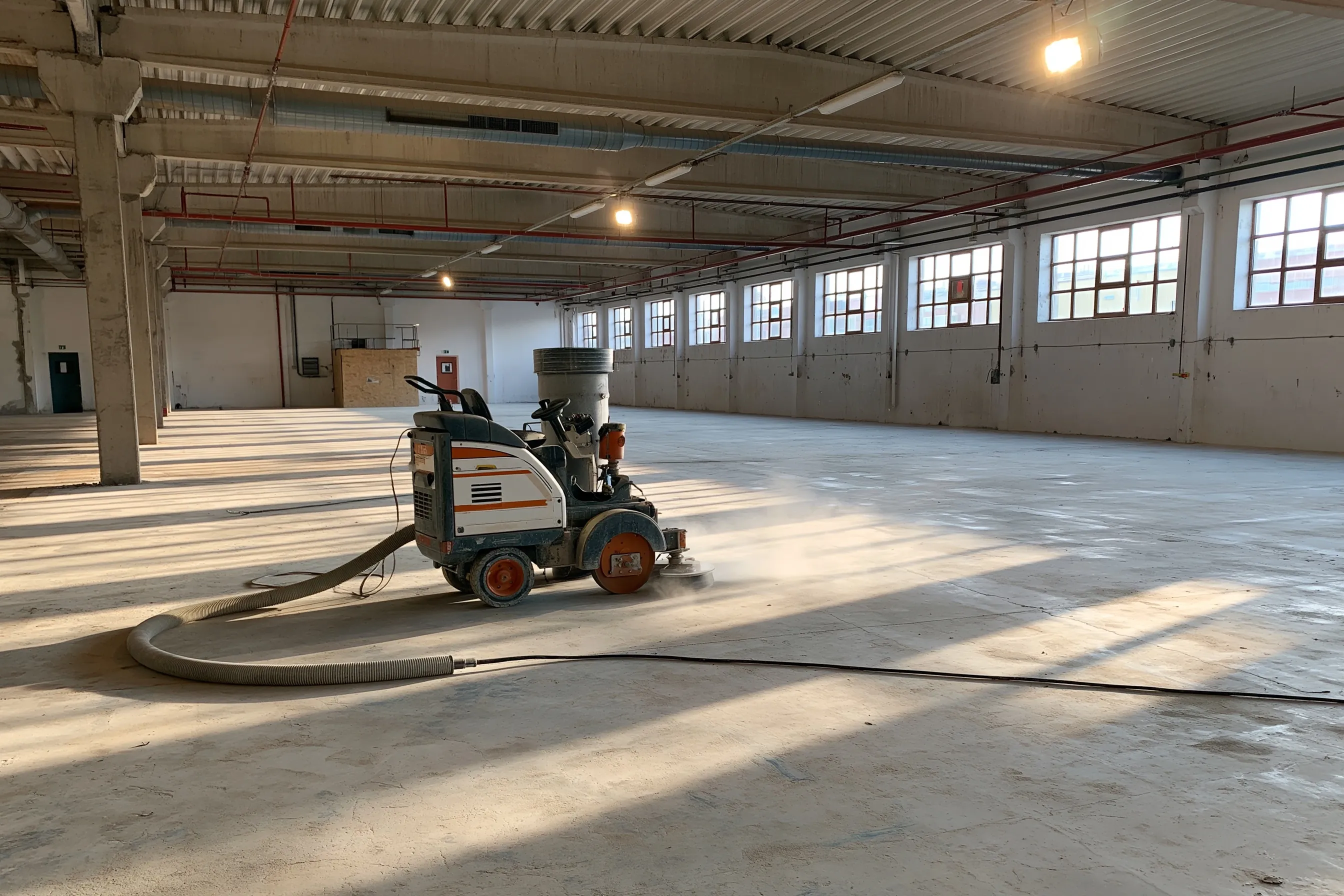
Walk-behind concrete grinder with a dust hose on a bare gray slab in an empty industrial building with tall windows
Space
Empty industrial building in Glendale with tall windows on one wall
Original request
A floor that stays clean and looks even across the whole building
Floor
About 6,500 sq ft of bare gray slab
Finish
Satin polish
Equipment
A walk-behind grinder with a dust hose
Estimated cost
$20,800

Scope of work

Slab swept, the grinder run in lanes with dust pulled out through a hose, cracks and joints filled, a densifier, polishing to a satin finish and a guard. Racking and equipment are placed by the tenant afterward.

Project overview

In this example, a company is taking an empty industrial building in Glendale and wants the whole floor polished. The slab is bare and dusty, and the windows along one wall make the floor a big part of how the space looks.

A grinder covers the floor in lanes, with dust pulled out through a hose, and the slab is polished to a satin finish in steps. On a floor this big the rate per square foot is lower than in a small shop.

The goal

The goal is one even satin floor across the building, ready for racking and equipment.

Process

  1. Planning Floor walked, joints and cracks marked and the finish chosen.
  2. Grinding Slab ground in lanes with dust pulled out as it goes.
  3. Polish Joints and cracks filled, densifier applied and the floor polished.
  4. Guard Guard applied and the building handed back.

Planning right

  • A bigger floor costs less per square foot than a small one.
  • Tell us about forklift or pallet-jack traffic.
  • Mark where racking and machines will stand.
  • Dust from grinding is pulled out through a hose to a vacuum.

Get a free quoteMore about commercial polished concrete

Garage floor ground in steps and sealed

Example project

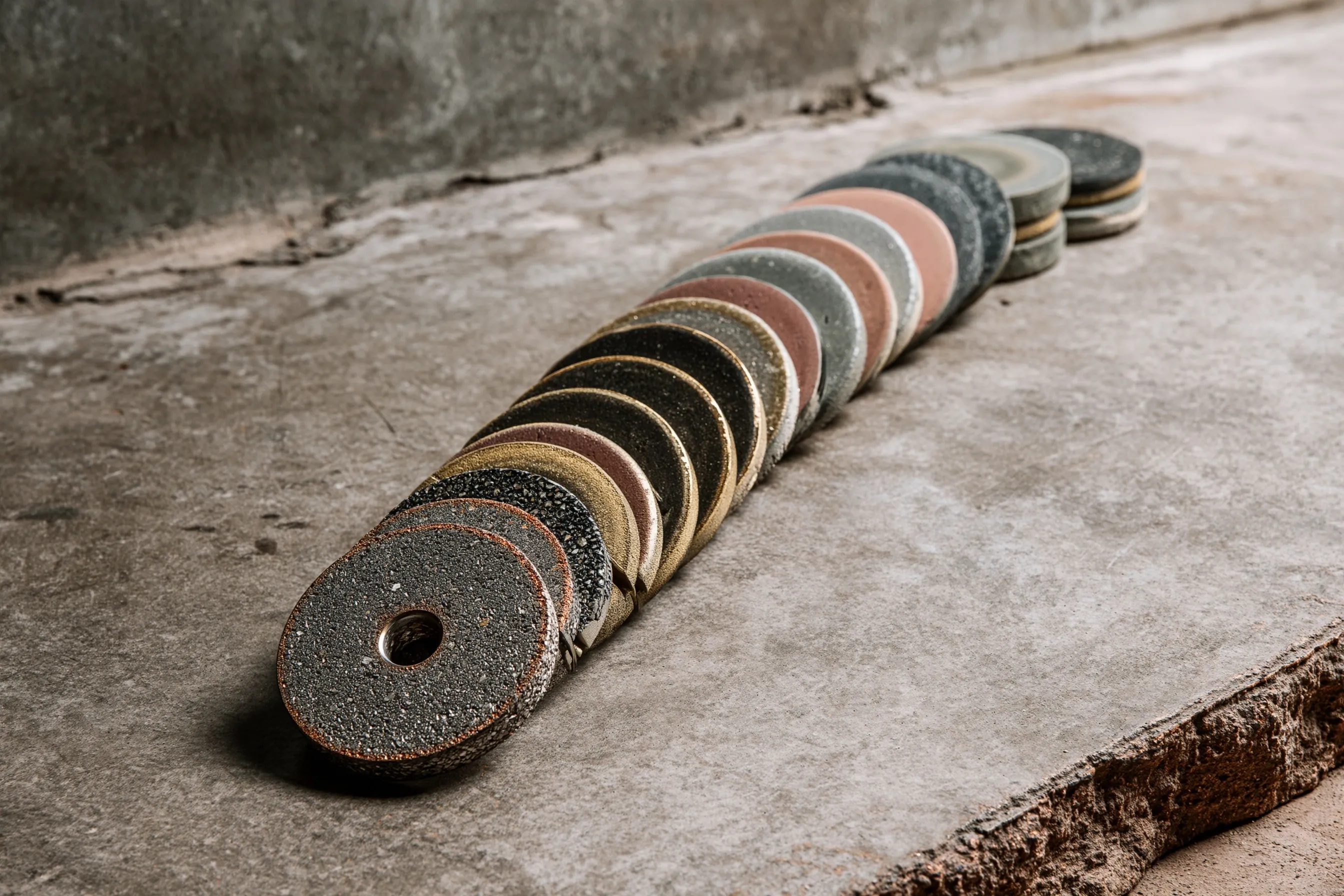
Row of grinding and polishing discs laid out from coarse to fine on a rough concrete slab beside a wall
Home
1970s house in Sun City with a two-car garage
Original request
A smooth, sealed garage floor that is easy to sweep
Floor
About 480 sq ft of rough slab
Tools
Grinding discs laid out from coarse to fine
Finish
Ground and sealed, not polished
Estimated cost
$1,700

Scope of work

Garage emptied, the slab degreased, ground with a coarse disc and then finer ones, cracks filled, the floor cleaned and a sealer rolled on.

Project overview

In this example, the owner of a 1970s house in Sun City has a rough garage slab that is hard to sweep. A full polish is more than the garage needs, and a sealed floor is enough.

The discs are used from coarse to fine, so each one removes the scratches of the one before. The slab ends up smooth, and the sealer goes on to keep spills from soaking in.

The goal

The goal is a smooth, sealed garage floor that sweeps clean.

Process

  1. Planning Floor checked for oil, cracks and rough spots.
  2. Grinding Slab ground with the coarse disc, then the finer ones.
  3. Repairs Cracks filled and the floor cleaned.
  4. Sealing Sealer rolled on in thin coats.

Planning right

  • A sealed floor is recoated rather than polished back.
  • Rough spots are ground out, but deep pits are filled.
  • Park outside until the sealer has dried.
  • Tell us if anything stored in the garage cannot be moved.

Get a free quoteMore about grind and seal floors

Back room of a rental stripped back to the slab

Example project

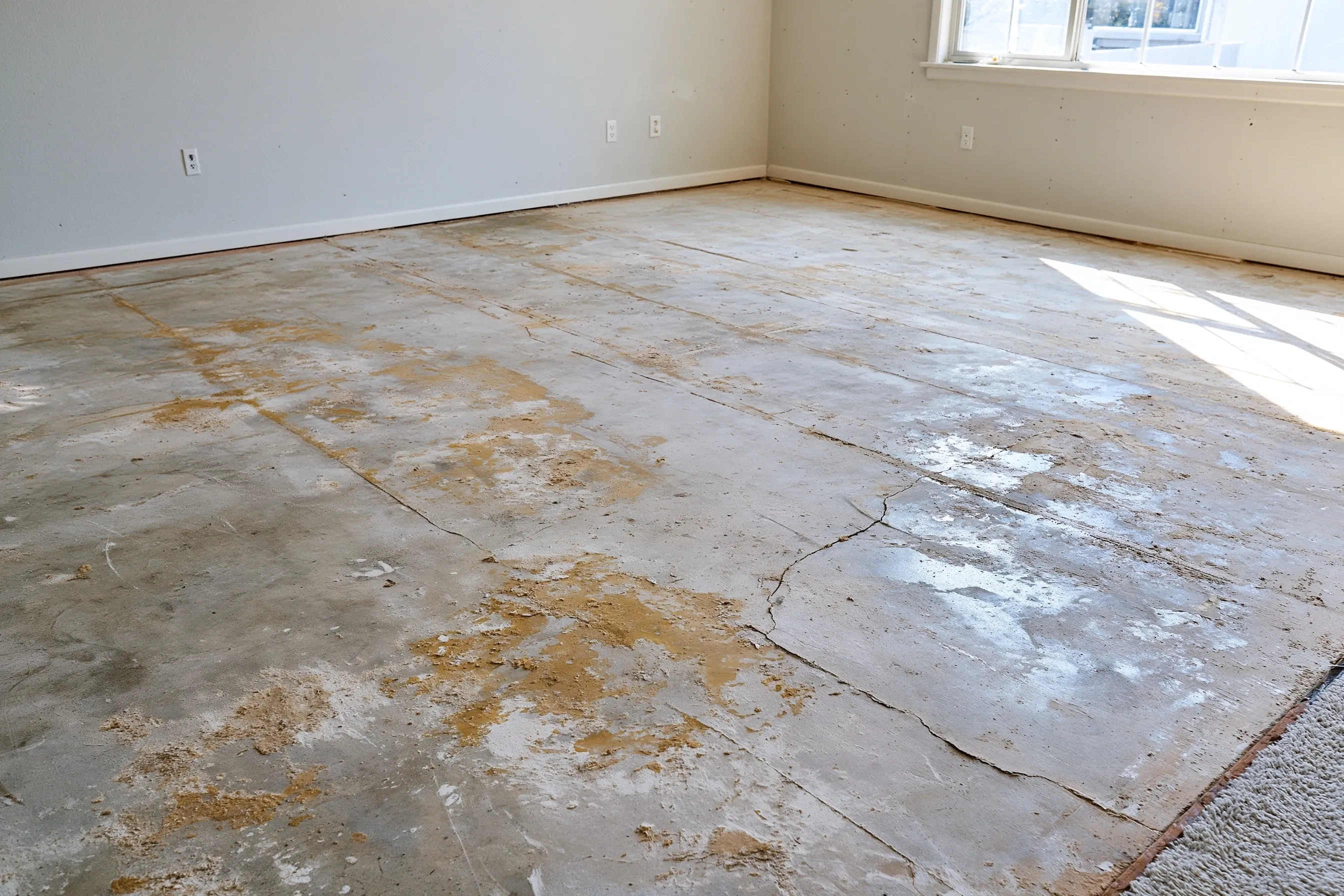
Empty room with a bare concrete slab, patches of old yellow adhesive, hairline cracks and daylight from one window
Home
1970s house in Phoenix that the owner rents out
Original request
Stop re-carpeting between tenants and leave a floor that wipes clean
Floor
About 280 sq ft of slab with patches of old yellow glue and hairline cracks
Prep
Glue sampled and tested, then ground; cracks filled
Next step
Polish or sealer quoted on the other lines
Estimated cost
$700

Scope of work

The last of the carpet and the tack strips lifted, a sample of the glue sent for testing, the glue ground off once it is cleared, hairline cracks filled and the slab swept clean. Any removal of glue that tests positive is quoted apart.

Project overview

In this example, the owner of a 1970s rental in Phoenix is tired of replacing the carpet every time a tenant leaves. With the carpet up, the slab shows old yellow glue and a few hairline cracks.

Glue in a house of that age can contain asbestos, so a sample goes to a lab first. If it comes back clear, the glue is ground away and the cracks are filled, and the owner can choose a polish or a sealer.

The goal

The goal is a bare, tested slab that tenants cannot stain and the owner never has to re-carpet.

Process

  1. Sampling Room measured and a sample of the glue sent for testing.
  2. Stripping Tack strips lifted and the glue ground off once cleared.
  3. Filling Hairline cracks filled and the slab swept.
  4. Hand over Slab left bare for the polish or sealer.

Planning right

  • A positive test means removal is priced on its own.
  • Old glue shows as yellow patches on bare slab.
  • A filled hairline crack can still show as a faint line.
  • If other rooms are carpeted too, tell us; a larger area costs less per square foot.

Get a free quoteMore about concrete floor restoration

Request a free polished concrete quote

Tell us what kind of floor you have in mind, the rough size of the room and what is on the slab now. Photos help. We'll get back to you soon with an estimate or any questions we have. Estimates are free and there's no obligation.

Call (888) 663-7145

Call (888) 663-7145