Polished concrete or epoxy for your garage
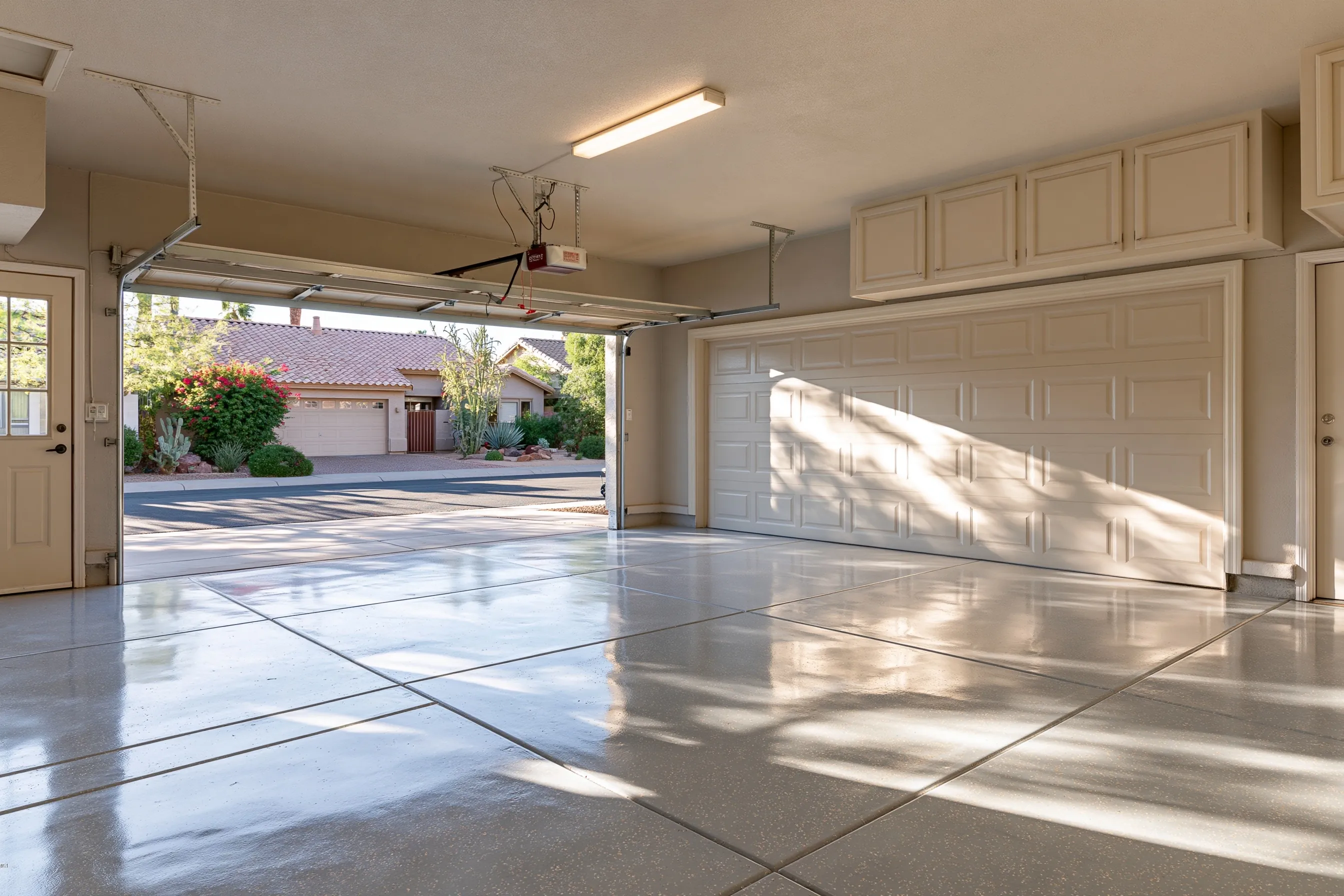
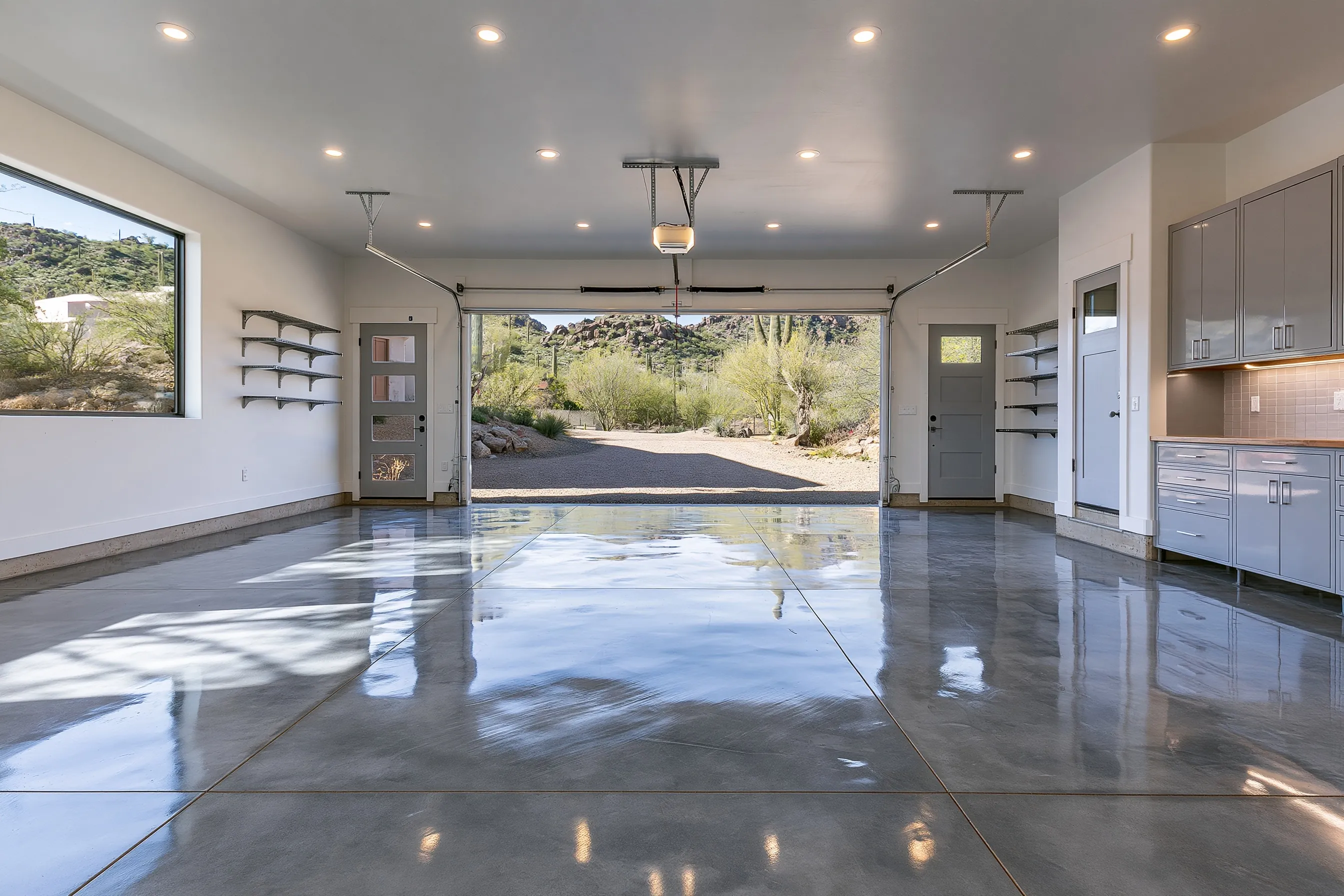
Polishing refines the slab surface itself. Epoxy, polyaspartic and urethane are coatings: a layer applied over a prepared slab. Neither is better for everyone. Polishing gives up some chemical and stain resistance, since the surface remains concrete, and gains a floor with no coating that can lift or peel.
If you plan to charge batteries or handle chemicals in one spot, a coating there may suit the job better than bare polished concrete, and an honest installer will tell you so. We do not quote durability or lifespan numbers for either system, because the comparisons we found are sales claims, not tests.
What happens to a builder-grade slab
Garage slabs are poured and finished for function, not polish. Trowel marks, small dips and a few hairline cracks may sit in the surface, and the control joints will show as lines that can be filled. Oil that has soaked in can leave a shadow that grinding may lessen but cannot promise to remove.
Before polishing we scratch-test a spot, because the polishing specification expects a surface harder than 4 on the Mohs scale. If a garage slab is soft, a sealed finish may be a better plan than a high polish.
Oil, chemicals and wet floors
Polished concrete is not chemical containment. Acids and some cleaners can etch it, and oil can leave marks. Gloss alone says nothing about grip, and a wet or oily polished floor can be slick, so walk-off mats at the door from the house and at the garage door help, and a slip test makes sense if the floor will be wet. We never call a polished floor slip-resistant.
Paint, epoxy or sealer left on a garage slab has to come off before polishing, and that removal falls under concrete floor restoration. Color for the garage is covered by stained and dyed concrete floors, and the Glendale Polished Concrete home page shows the other services.