
Carpet, pad and tack strip
Carpet and pad lift off first, then the tack strips with their nails. What stays behind is glue spots, nail holes and possibly staining where the pad sat. Those are ground out or filled, depending on how deep they go.
Typical cost in Glendale
Glendale Polished Concrete handles concrete floor restoration in Glendale: taking carpet, tack strips, glue, tile, thinset and old coatings off an existing slab, repairing what is underneath and preparing it for polishing, staining or sealing. If you have lifted a corner of carpet and found concrete, this is the page about what happens next.
About 35 percent of Glendale’s homes were built before 1980, so an older house may have had a covering laid over its original slab at some point. Phoenix and Sun City jobs are also taken.
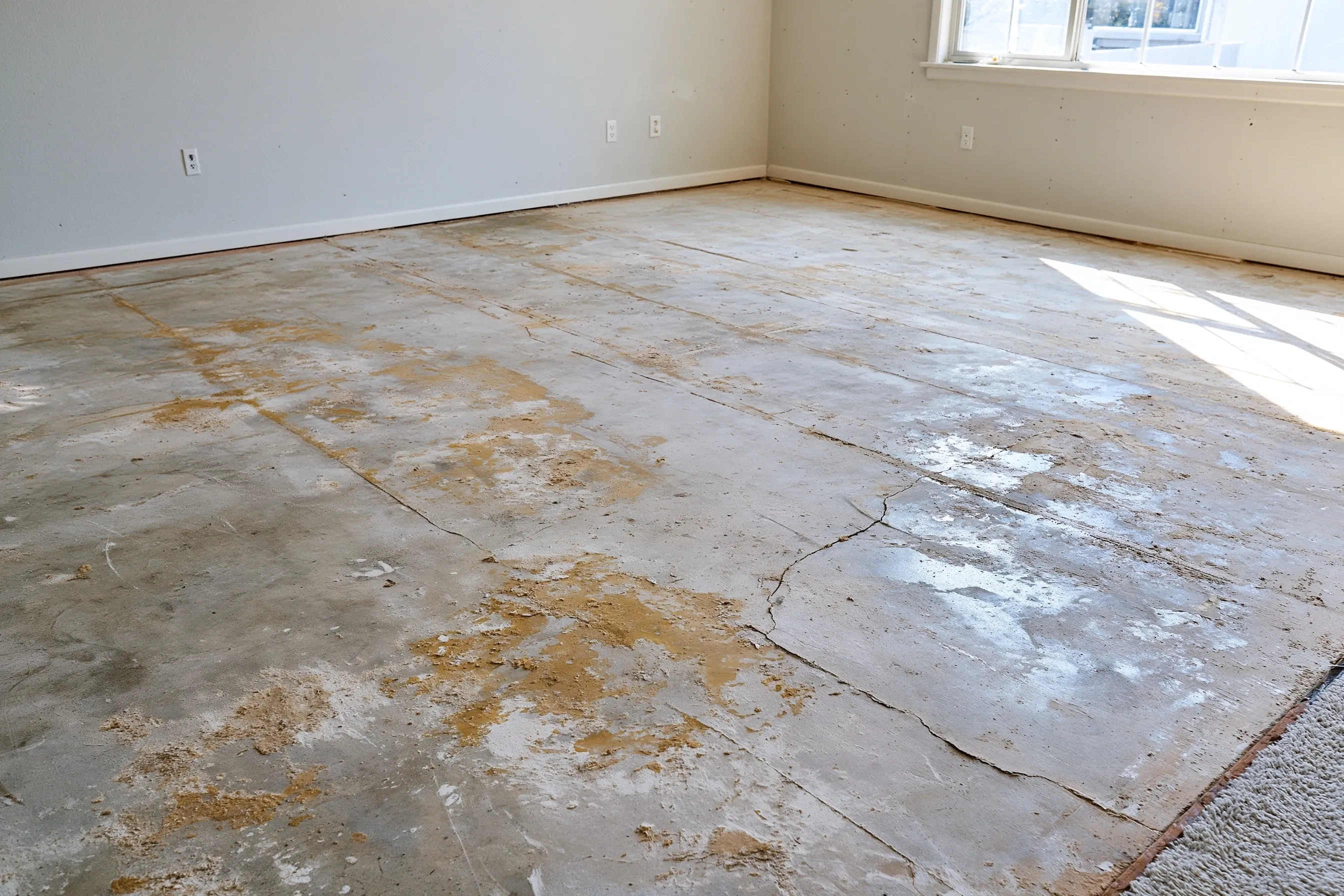
Carpet and pad lift off first, then the tack strips with their nails. What stays behind is glue spots, nail holes and possibly staining where the pad sat. Those are ground out or filled, depending on how deep they go.
Vinyl, linoleum and sheet flooring can be laid in an adhesive layer called mastic, which can be thick and sticky. Grinding it loads the tooling quickly, so it is removed before the fine work, and the test described below comes first for older floors.
Ceramic tile comes up in pieces, leaving ridges of thinset that are ground off flat. Tile also brings up the question of what is under it, so the edges and any cracks are checked as the slab is exposed.
Paint, epoxy and sealer from earlier owners are ground away before polishing or color, because a leftover film sits between the tooling, the densifier or dye and the concrete. Ground-off coating leaves the slab looking different from the original floor, and a test spot shows how.
Floor tile, sheet flooring and the mastic under them from older homes can contain asbestos. There is no comprehensive ban on asbestos materials in the United States, so a newer house is not a guarantee. Grinding such flooring is exactly the kind of work that turns it into dust.
Maricopa County’s air quality handbook sets out where the line falls. An owner-occupied parcel with four or fewer dwelling units sits outside its regulated facilities. Any building used for commercial purposes, a residential building of five or more units and association-owned portions sit inside them. Resilient floor covering counts as nonfriable asbestos material only if it contains more than 1 percent asbestos by an approved test method, and then becomes regulated material if it is to be sanded, ground, cut or abraded; and flooring mastic can turn friable under mechanical tools. For a regulated project a currently certified AHERA inspector has to inspect first.
Rules or no rules for your particular house, the only way to learn what the flooring and its mastic contain is a lab test before anyone grinds. The county asbestos hotline is 602-506-6708. This is general information, not legal advice.
Slabs are saw-cut with control joints so that cracks form along planned lines; a joint steers a crack and does not prevent one. Joints stay visible after polishing and can be filled, and hairline cracks remain as fine lines.
Cracks and holes can be filled and patches ground level, but a repair never disappears: filler takes polish and color differently from the concrete around it. A crack that keeps widening, or has one side sitting higher than the other, is a job for a structural engineer, which this work is not.
Once the covering is off, you may see marks of moisture, saw cuts, filled plumbing trenches, color differences from old spills and glue, and soft or dusty spots. A weak surface is the one that matters most to polishing, since the finish calls for a surface harder than 4 on the Mohs scale, and a densifier cannot always rescue a weak slab. We scratch-test and tell you before committing to a polished finish.
Dust is part of grinding. We run grinders with dust collection or water on the machine and clean between passes rather than letting dust drift through the house.
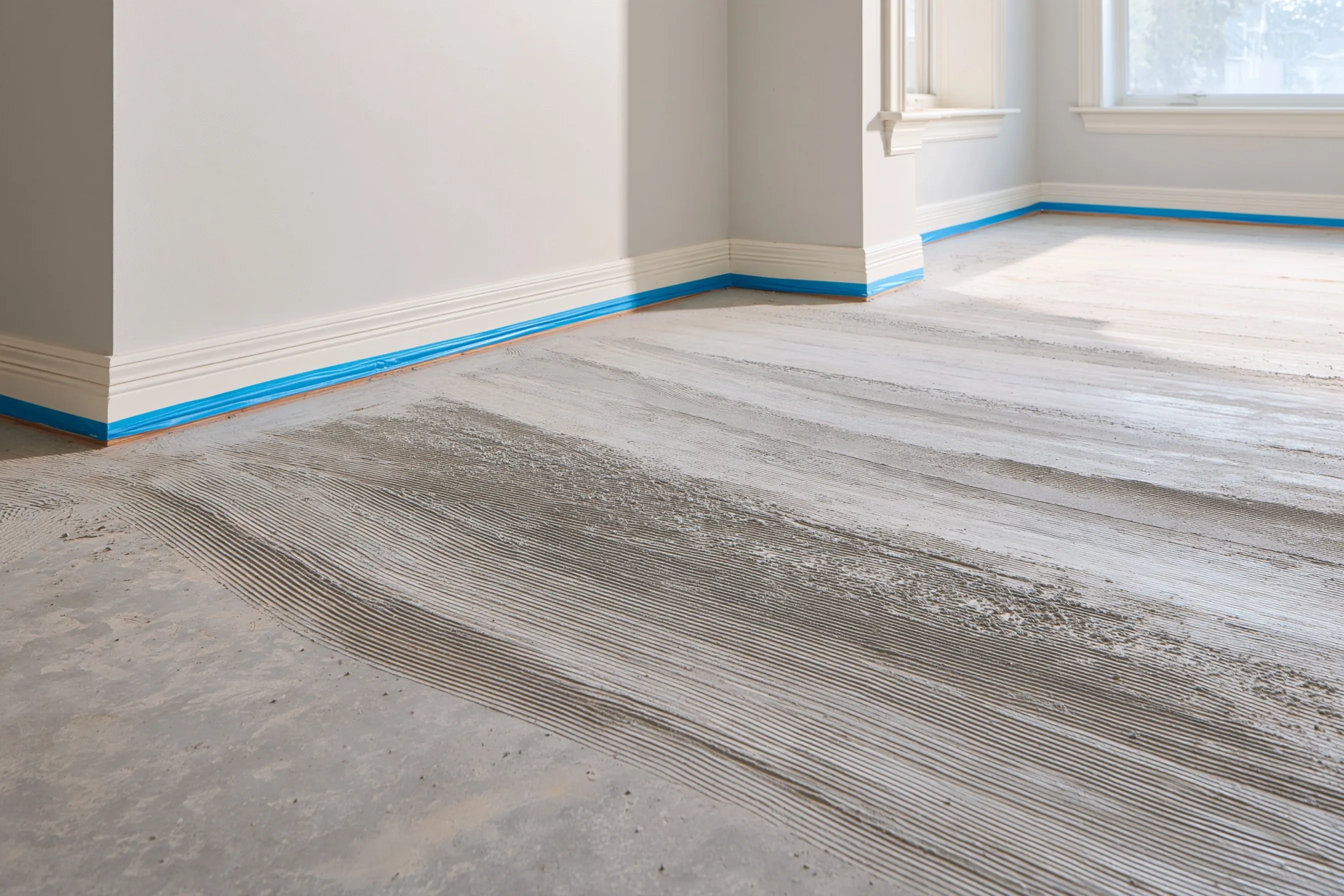
Yes, after the covering and glue are removed and the surface is tested. A slab too soft or too damaged may be better sealed than polished, and we say so.
By grinding with coarse tooling after the carpet and pad are out, once any older flooring has been tested.
No. Filling and grinding make them flat and smooth, but cracks, joints and repairs remain visible in a polished or sealed floor. Color can help hide them, but not erase them.
Once a slab is stripped, the next step is picking a finish. The options are polished concrete garage floors for the garage, stained and dyed concrete floors for color and grind and seal concrete floors for a lighter coat. The Glendale Polished Concrete home page shows how all five services fit.
Say what is covering the slab, roughly when the house was built and whether the flooring has been lab-tested. Cracks, patches or damp spots you have noticed are worth a line too. We'll get back to you soon with an estimate or any questions we have. Estimates are free and there's no obligation.
Call (888) 663-7145