
Retail shops and showrooms
A high-gloss floor can bounce light around a showroom and show off displays. A glossier floor also shows scratches and marks more, so level and traffic are worth discussing together.
Typical cost in Glendale
Commercial polished concrete is what Glendale Polished Concrete offers shops, showrooms, offices, restaurants and workshops in Glendale, whether the space is a fresh tenant improvement or an older building shedding a worn covering. A business floor raises different questions from a home: how long the doors can stay shut, where dust and noise go, and what sits under the finish already there.
Glendale’s housing includes about one in four units in buildings of five or more, and its older commercial strips may have floors laid decades ago. We work on commercial floors in Glendale and in nearby Phoenix and Sun City.
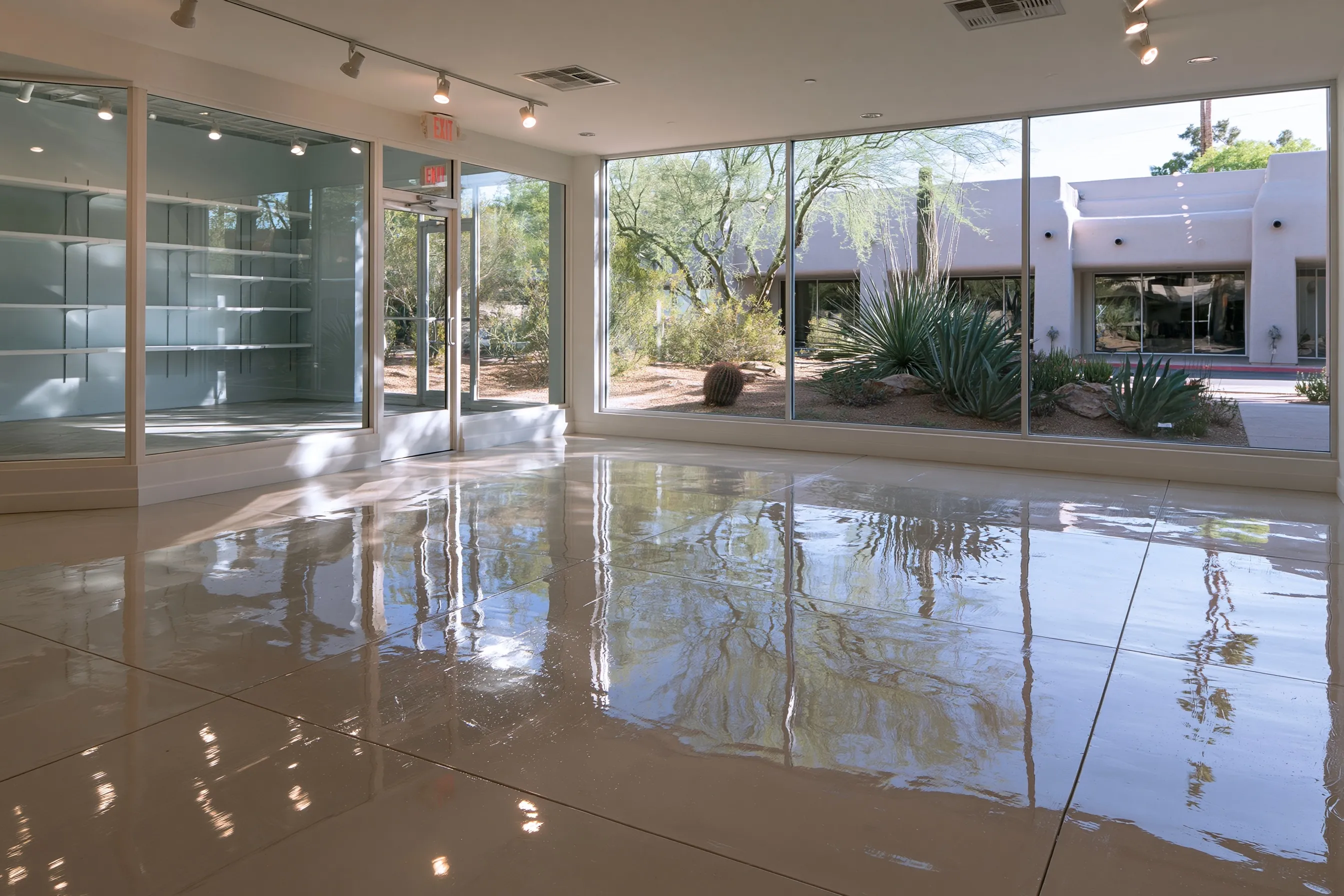
A high-gloss floor can bounce light around a showroom and show off displays. A glossier floor also shows scratches and marks more, so level and traffic are worth discussing together.
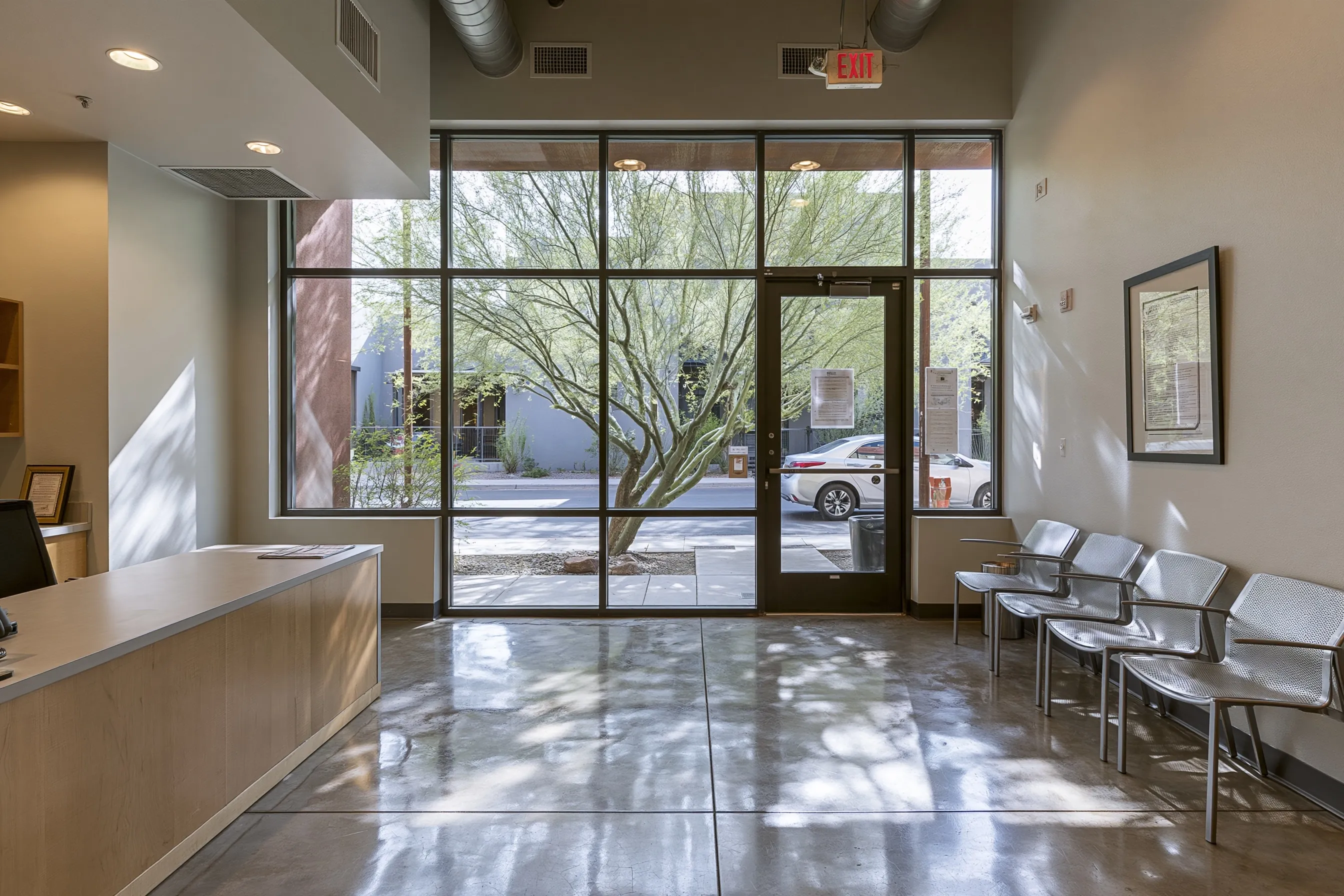
A satin or polished finish suits an office lobby or reception: it is easy to wipe and has no seams between pieces of flooring. Entrances collect grit, so mats are worth planning.
Dining rooms can take a polished or sealed finish. Kitchens and prep areas bring grease and water; ask for slip testing on the finish and think about mats and drains before choosing a gloss.
Shop and warehouse floors suit a denser, ground-and-sealed or lightly polished finish. Forklift traffic, heavy loads and chemicals need a plain discussion about what concrete alone will tolerate.
A tenant improvement can start from an existing slab with tile, carpet, vinyl or coating on it. Those come off first, and the slab underneath decides the result: joints, patches, previous adhesives and moisture marks are all part of it. Polishing does not flatten a floor, and hand-polished edges at walls and columns can look different from the open field.
A new slab is a separate case, with its own mix, curing and timing. Either way, the trade approves a mockup on the actual concrete before the full floor, so you see the real finish rather than a brochure.
Grinding makes noise and dust, and the machines run with dust collection or water. For an occupied building, work can be phased by zone, or scheduled outside business hours, so the business keeps running. We do not promise timelines before seeing the space.
A finished floor needs protection from later trades: no storing materials on it, no taping to it, and breathable cover over it while construction continues. That is a planning item, not an afterthought.
Appearance runs from flat through satin and polished to high polish. Higher levels reflect more light and show marks more clearly. Wet entrances, kitchens and restrooms call for a plain conversation about traction: gloss alone does not indicate grip, so ask for slip testing where floors get wet.
A pre-1980 building can have resilient floor tile and black mastic under the carpet. In Maricopa County, commercial buildings count as regulated facilities under the asbestos rules, and floor covering that will be ground can be regulated material. A thorough inspection by a certified AHERA inspector comes before such a project, so test the old flooring before anyone grinds it. Whether the county or another agency covers your building depends on where it is.
Yes, once the flooring and adhesive are off and the slab tested. We tell you what the slab shows before settling on a finish.
It can be planned in zones so part of the space stays in use, though dust, noise and curing affect how. We plan it after seeing the building.
For an older building, yes: floor tile and mastic can contain asbestos, and Maricopa County treats commercial buildings as regulated facilities. Test before grinding.
A shop or office slab buried under tile or carpet is a concrete floor restoration job before it is anything else. If a gloss floor would be overspending for the use, grind and seal concrete floors gets a plainer result, and the Glendale Polished Concrete home page shows how the services fit together.
Tell us what the space is used for, roughly how many square feet it covers, what the floor is now and when it has to be back in use. Say if the building is older. We'll get back to you soon with an estimate or any questions we have. Estimates are free and there's no obligation.
Call (888) 663-7145